Can Urgent Care Do a CT Scan? What Florida Patients Should Know
Key Takeaways
- 1
Most urgent care centers cannot perform a CT scan on site because the scanner needs a shielded room, a technologist, and a radiologist.
- 2
A small number of larger or injury focused urgent care clinics do offer on-site CT, so call ahead and confirm rather than assuming.
- 3
You can ask for a CT scan but you cannot order one yourself, because a clinician decides whether imaging will change your care.
- 4
Head injury with confusion or repeated vomiting, abdominal pain after a seatbelt impact, and neurological symptoms are common reasons a scan is ordered.
- 5
In Florida you must receive initial medical care within 14 days of a crash to remain eligible for PIP benefits.
You have a bad headache after a fall, a crash, or a hard hit, and someone told you that you need a CT scan. The emergency room means a long wait and a big bill, so the obvious question is whether the walk-in clinic down the road can just do it instead.
Here is the short answer: most urgent care centers cannot perform a CT scan on site, but a small number can. The difference comes down to equipment, not willingness. Knowing which kind of clinic you are driving to saves you a wasted trip when you are already having a rough day.
This guide explains why on-site CT is uncommon, how to confirm a clinic actually has a scanner before you leave the house, when a CT is genuinely needed, and what happens if the clinic you visit cannot scan you. If you were hurt in a crash specifically, our car accident injury clinic page covers the full evaluation process.
Do they do CT scans in urgent care?
Usually not. A typical urgent care is built for the things that send people in most often: infections, sprains, cuts, and simple fractures. That level of care needs an exam room and often an X-ray machine, and not much more.
A CT scanner is a different category of equipment. Three things stand in the way for most clinics:
The machine is expensive and takes up a dedicated room, which is hard to justify for a clinic that would use it rarely.
The room has to be shielded. CT uses X-ray radiation, so the space needs proper construction and safety approval, not just a spare exam room.
Someone has to read the images. A scan is only useful if a radiologist interprets it, so the clinic needs that arrangement in place before it can offer the service.
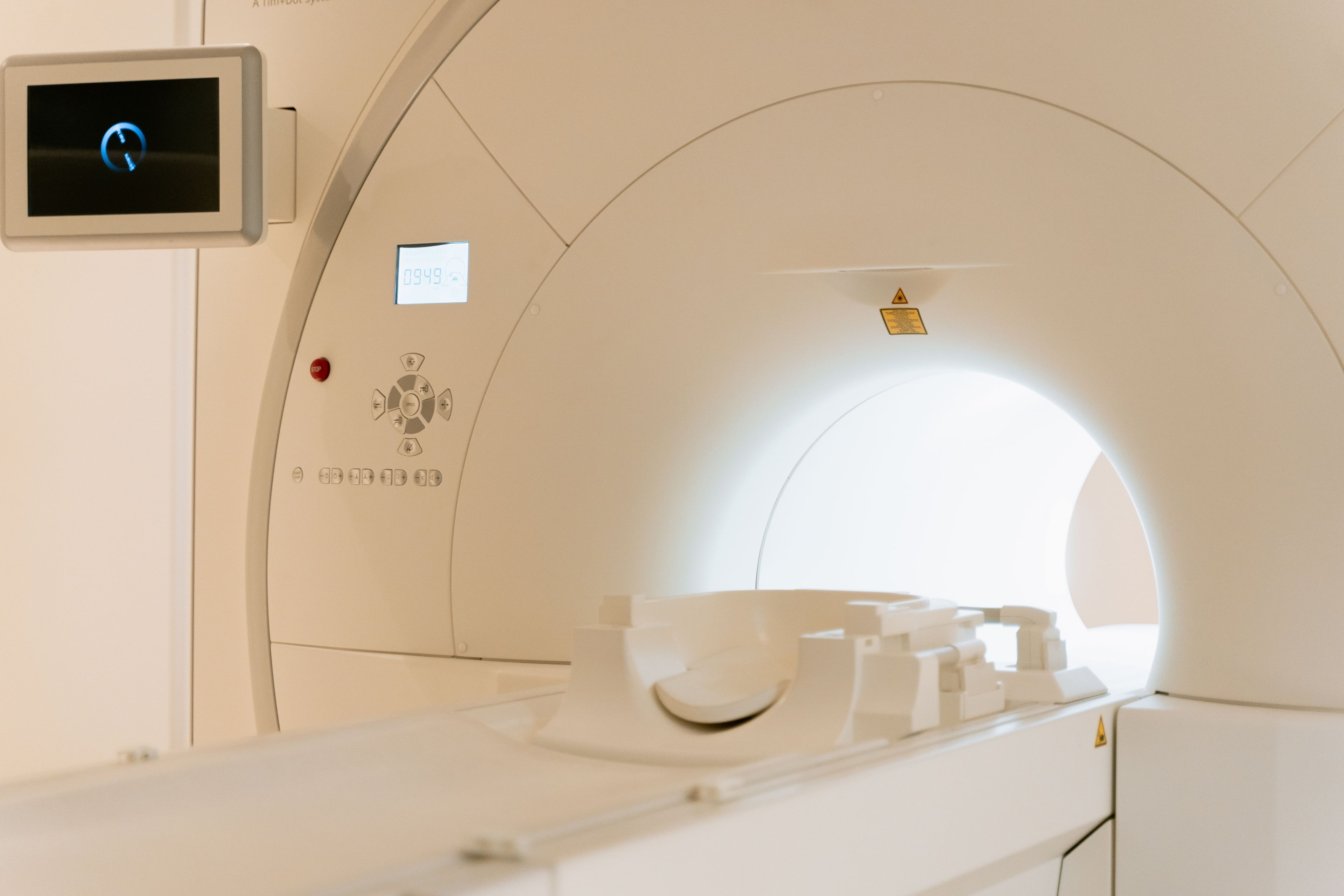
Clinics that do offer CT tend to be larger, hospital affiliated, or purpose built for injury and accident care. Primary & Urgent Care Center is one of the clinics built around injury and accident care. We offer same-day CT imaging for patients across Palm Beach County, and digital X-ray on site at all four of our locations, so a scan that is medically necessary can be arranged the same day instead of becoming a second appointment weeks later. Call the location you plan to visit and we will tell you what we can do for you that day.
How to check before you drive over
Do not assume, and do not rely on a general search result. Clinic services change, and a page that mentions imaging does not always mean a scanner is in the building today. Call ahead and ask these four questions:
Do you have a CT scanner on site, and is it working today?
Is a technologist available during the hours I am coming in?
How quickly will someone read the images and give me results?
Do you take my insurance, and what will I owe if a scan is needed?
That last question matters more than people expect. A clinic can have the machine and still not be in your network. Two minutes on the phone is worth more than an hour in a waiting room.
Can you just ask for a CT scan?
You can ask, and you should say what you are worried about. What you cannot do is order one for yourself. A CT has to be requested by a clinician after an examination, because imaging is a diagnostic tool rather than a service you select from a menu.
There are good reasons for that. A scan exposes you to radiation, so it is only worth doing when the result would actually change your care. It can also turn up harmless findings that lead to more tests and more worry without making you any healthier. And in many cases a different test answers the question better. A CT is excellent for bleeding, fractures, and internal injury, while soft tissue problems such as a disc or a ligament often show up far better on MRI.
So describe your symptoms clearly, mention anything that scares you, and ask directly whether imaging is appropriate. A good clinician will tell you why yes or why no. If the answer is no, ask what would change that answer, and what to watch for at home.
What symptoms would require a CT scan?
A clinician weighs how you were injured against what your exam shows. Some findings raise the likelihood enough that a scan becomes the sensible next step. Read the red-flag list in the next section first, because a few of these can also signal an emergency. If any red flag applies to you, go to the emergency room rather than a clinic, even if a scan is what you think you need:
A head injury with loss of consciousness, confusion, repeated vomiting, or a headache that keeps getting worse. Any of these means the emergency room, not a walk-in clinic.
Significant abdominal pain or bruising after a seatbelt or steering wheel impact, which can point to an internal injury.
Chest pain after a forceful impact, where a rib or breastbone injury is possible.
Neck or spine pain with numbness, tingling, or weakness in an arm or leg. Numbness or weakness after an injury needs emergency care too.
A suspected fracture that an X-ray cannot show clearly enough to plan treatment.
Red-flag symptoms that require ER care
Some situations are past the point where a clinic visit is the right call. Call 911 or go to the emergency room if you have any of the following:
Loss of consciousness, a seizure, or worsening confusion.
Trouble breathing, severe chest pain, or coughing up blood.
A rigid, swollen, or severely painful abdomen.
Weakness, numbness, or loss of bladder or bowel control.
Heavy bleeding, an obvious deformity, or a bone through the skin.
Any head injury at all if you take a blood thinner or an antiplatelet medication, even when you feel fine.
If you are unsure which setting fits your situation, our guide to urgent care versus the ER after a car accident walks through the decision.
Can I ask for a CT scan at the ER?
Same answer, same reasoning. An emergency physician decides based on your exam, and asking does not guarantee a scan. What the ER does have is round-the-clock imaging and the ability to handle whatever the scan finds, including surgery. That is the real reason to choose it for a serious injury.
The tradeoff is time and money. Emergency departments triage by severity, so a stable patient can wait a long while, and the bill is typically much higher than a clinic visit for the same imaging. For an injury that is uncomfortable but not dangerous, a clinic with a scanner gives you the same answer with less of both.
What happens if the clinic cannot scan you
You do not leave empty handed. A clinic without CT can still examine you, take X-rays, treat your pain, and document the injury. If imaging is needed, they refer you to an imaging center or send you to the emergency room when the situation calls for it.
That referral costs you a second trip and a delay of a day or more. It also splits your records across two places, which matters more than most people realize if you later need to prove what was found and when.
Florida's 14-day PIP rule
If your injury came from a car crash in Florida, there is a deadline you need to know about. Florida is a no-fault state, so your own Personal Injury Protection coverage helps pay for care regardless of who caused the crash. To stay eligible, you must receive initial medical care within 14 days of the accident.
Under Florida law, PIP can cover up to $10,000 in medical benefits when a physician, a dentist, a physician assistant, or an advanced practice registered nurse determines you have an emergency medical condition. If no emergency medical condition is found, benefits are limited to $2,500. The 14-day clock runs from the date of the accident, not the date your symptoms started, so a pain that shows up a week later does not buy you extra time.
This is one more reason it pays to ask what a clinic can arrange for you. Getting examined, imaged, and documented quickly keeps you inside the window with room to spare. Our page on PIP exams and documentation explains what the paperwork needs to show.
What to expect at your visit
A visit for possible imaging follows a predictable path. The provider takes your history, including how the injury happened and what you have felt since. Then comes a physical exam that checks the areas at risk based on that history.
If imaging is warranted, the provider arranges it and tells you where and when it will happen. A CT itself is quick and painless. You lie still on a table that moves through a ring-shaped scanner, and the scan itself usually takes only a few minutes, though checking in and getting ready adds to the visit. Afterward the provider goes through the findings with you, explains what they mean, and documents everything for your records and your insurer.
Walk-ins are welcome, so you do not need an appointment to be seen. If you want the detail on which crash injuries call for a scan and how CT compares with X-ray and MRI, read our companion guide on when to get a CT scan after a car accident.
The bottom line
Most urgent care centers cannot do a CT scan, so the honest advice is to call before you go. A clinic that has a scanner, a technologist, and a radiologist can give you an answer the same day, which beats a referral and a second appointment when you are hurt and want to know what is wrong.
If you are in Palm Beach County and think you may need imaging after an injury or a crash, our team can examine you, scan you when it is medically necessary, and document everything the same day. Learn more about our car accident injury clinic, or walk in when you are ready.
Frequently Asked Questions
Need Same-Day Care?
Skip the ER wait. Book an appointment or walk in today for expert medical care.